What Is Spatial Computing and Where Is It Used? A 2026 Guide
Spatial computing is quietly becoming the default technology layer for modern enterprise operations. Here is what it is, where it is being used, and why the companies adopting it now will define the next decade.
Published
13 AUG 2026
Reading Time
5 min read
Author
The Shivlam Team
Category
Spatial Computing
Spatial computing is quietly becoming the default technology layer for modern enterprise operations. Here is what it is, where it is being used, and why the companies adopting it now will define the next decade.
⚡ TL;DR
Spatial computing brings digital content into physical space through AR, VR, and digital twins. It is already deployed in construction, healthcare, manufacturing, and four other industries. Devices like Apple Vision Pro, Meta Quest 3, and iPad Pro make it usable today. Companies adopting it now, including Shivlam clients across India, the UAE, Singapore, and the USA, are moving ahead of the market by three to five years.
🎬 The scene most enterprise teams will recognise by 2028
A construction manager in Ahmedabad points an iPad at a wall and sees the plumbing, HVAC, and electrical layers overlaid on the concrete in real time.
A surgeon in Singapore rehearses a procedure in virtual reality before ever touching a patient.
A factory operator in Dubai trains on a fully working digital replica of a machine that costs several million dollars to shut down.
Three different cities. Three different industries. One technology behind all of them.
It is called spatial computing, and it is the technology layer most enterprise teams will be using within five years, whether they realise it or not.
🧭 What is spatial computing, in plain language
Spatial computing is a way of using computers where digital content lives inside physical space, rather than being trapped behind a flat screen. Instead of scrolling, tapping, or clicking, users interact with 3D content using their eyes, hands, voice, and body position.
In practical terms, spatial computing does three things:
- It puts digital content inside physical space. This is augmented reality (AR). Think of a BIM model overlaid on a real construction site through an iPad camera.
- It puts people inside digital space. This is virtual reality (VR). Think of a surgeon rehearsing an operation inside a full 3D simulation.
- It creates real-time digital replicas of physical things. This is a digital twin. Think of a virtual copy of a factory floor that updates itself live as the real machines run.
What makes spatial computing different from just AR or just VR is that it treats space itself as a computing surface. The physical world becomes the interface.
🧱 The five building blocks of spatial computing
Every spatial computing project uses some combination of these five ingredients:
| Building Block | What It Does | Typical Device |
|---|---|---|
| Augmented Reality (AR) | Digital layer on top of the real world | iPad Pro, iPhone Pro |
| Virtual Reality (VR) | Fully immersive digital environment | Meta Quest 3, Vive |
| Mixed Reality (MR) | Hybrid where digital objects react to the real world | Apple Vision Pro, HoloLens |
| Digital Twin | Live virtual replica of a physical asset | Web dashboards, HMDs |
| 3D Reconstruction | Turning real spaces into usable 3D data | iPhone LiDAR, drones |
🏗️ Where spatial computing is being used today
Six industries are already deploying spatial computing at scale. Here is what it actually looks like in each.
1. Construction and Infrastructure
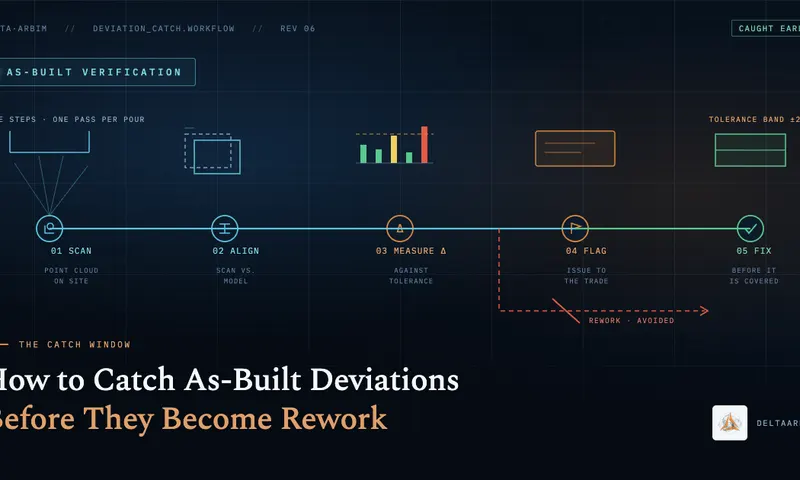
The most mature use case. AR-powered BIM viewers let site engineers walk a live construction floor and see structural, mechanical, and electrical layers overlaid on the physical build. This catches costly clashes before concrete is poured.
Our own product DeltaARBIM does exactly this on live projects. Construction teams using it report rework reductions of up to 40 percent.
2. Manufacturing
Digital twins create real-time virtual replicas of factory floors, production lines, and heavy machinery. Operators train on the twin instead of the real machine. Engineers test process changes virtually before implementing them. Predictive maintenance flags failures before they happen.
3. Healthcare and Pharma
VR is used for surgical rehearsal, medical education, and complex procedure training. Junior doctors practice a hundred simulated operations before scrubbing in for a real one. Pharma companies train field teams on new drug delivery devices using immersive modules.
4. Real Estate and Architecture
Immersive property walkthroughs let buyers experience a building before it is constructed. Developers close sales faster. Architects catch design issues earlier. Interior teams show fully staged spaces without moving a single piece of furniture.
5. Education and Skill Development
VR classrooms and immersive learning modules teach skills that are hard, dangerous, or expensive to practice in the real world. Welding, electrical work, aviation, and defence training all rely on it.
6. Energy and Utilities
Digital twin platforms are deployed for plants, refineries, and grid infrastructure. Operators monitor live telemetry inside a 3D replica of the facility. Emergency response teams rehearse critical incidents virtually.
📊 The measurable outcomes making CFOs pay attention
Enterprise buyers do not adopt technology because it is exciting. They adopt it because it moves numbers. Recent industry data shows why spatial computing has crossed the ROI line in 2026:
| Outcome | Improvement | Where It Shows Up |
|---|---|---|
| Construction rework reduction | 35 to 40% | AR BIM clash detection |
| Safety training compliance | +45% | Immersive VR training |
| Training time reduction | -33% | Immersive simulation |
| Design-review turnaround | Up to 2x faster | Immersive stakeholder walkthroughs |
⏱️ Why 2026 is the year enterprises stop waiting
Three shifts happened in the last 24 months that turned spatial computing from a demo into a deployment technology:
Hardware got affordable. The Meta Quest 3 is under $500. iPad Pro with LiDAR is in most professional pockets. Apple Vision Pro created the first mainstream mixed-reality category.
Software matured. Apple visionOS, ARKit, RealityKit, Meta Quest SDK, and WebXR are all production-ready. Developer tooling caught up with buyer expectation.
AI made 3D reconstruction fast. Techniques like Gaussian splatting turned days of processing into minutes on a phone.
Result: spatial computing is no longer a technology looking for a use case. It is a use case looking for adoption.
🇮🇳 How Shivlam is building this in Bharat
At Shivlam, we build enterprise spatial computing solutions for clients across India, the UAE, Singapore, and the United States. Our flagship product DeltaARBIM is deployed on live construction sites today.
Two more products are in active development:
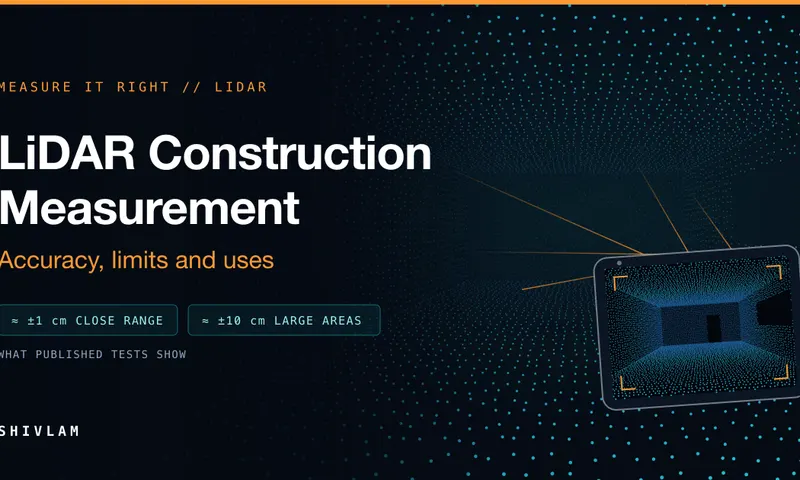
- DeltaTapeless, a LiDAR measurement app: one walk through a space gives the dimensions and the floor plan together
- DeltaRoomCraft, room scanning with furniture laid out at true scale, so an interior layout fits the room that exists
We are one of the few Indian engineering teams shipping spatial computing in production, not just prototyping. That distinction matters when enterprise buyers are evaluating who can actually deliver.
🚀 Where this is going
By 2028, spatial computing will be a default expectation in enterprise operations, the way mobile apps became a default expectation between 2010 and 2015.
The companies that adopt it now, on iPads, headsets, and web-based XR platforms, will define what leadership looks like in their industries. The rest will spend the next decade catching up.
👋 Want to explore spatial computing for your organisation?
→ Explore our capabilities: shivlam.com/services/spatial-computing-company
→ See DeltaARBIM live: deltaarbim.tech
→ Talk to the team: hi@shivlam.com
The Shivlam Team
FAQ
Questions readers ask about this topic.
What is spatial computing in simple terms?
It is a way of using computers where digital content sits inside real space instead of behind a flat screen. You interact with 3D content through your eyes, hands, voice, and position, and the physical world becomes the interface.
How does a company get started?
Pick one high-value use case, run a scoped pilot on your own data or site, and prove the outcome before rolling out. A partner like Shivlam builds the tool around your workflow rather than handing you a fixed product.
How is spatial computing different from just AR or VR?
AR and VR are parts of it. Spatial computing is the broader idea that treats space itself as the computing surface, spanning AR (digital layered on the real world), VR (people inside a digital space), mixed reality, and digital twins, usually connected to real data.